Grumpy Old Many in Lockdown

So in these strange times we find ourselves in all the gyms are shut and we have to practice social distancing. So how do we look after our health and maintain our strength and fitness?

Ben Shills at Peak Performance Fitness has started a new service so that his clients can keep on top of their fitness during this time when we can not train together. He asks for a list of any equipment we have at home and then devises three full body workouts a week. These are sent by email along with accompanying videos where applicable (who knew what a Turkish get up was?). After each workout we send him feedback including scoring each exercise out of 10 to let him know the effort involved.

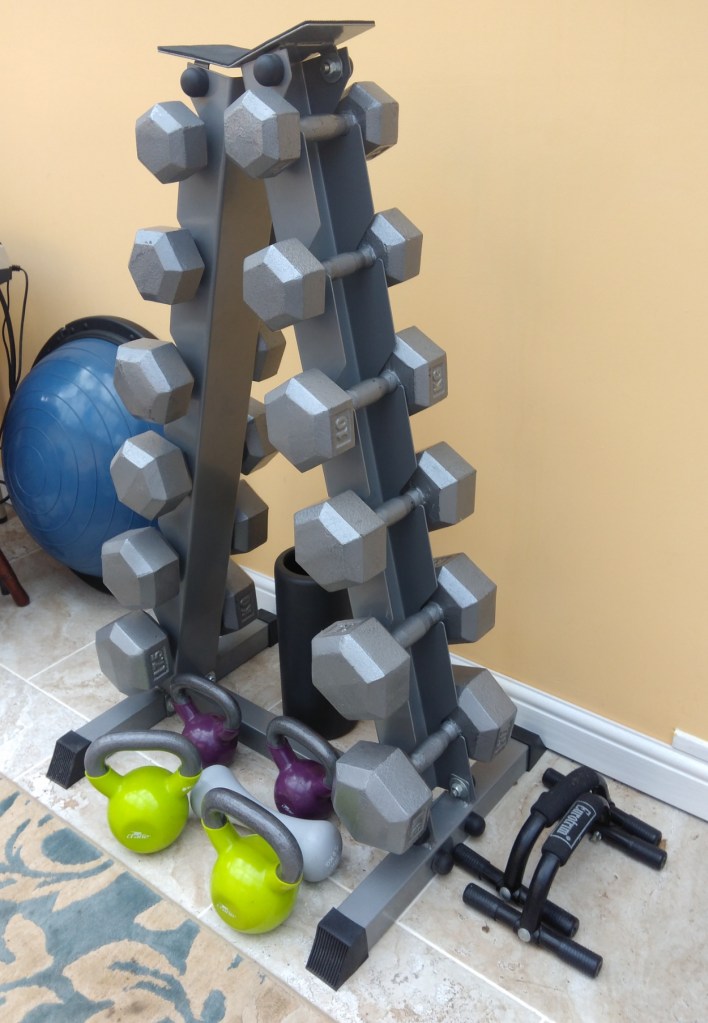
I am lucky in that I have quite a bit of equipment at home, though not the same sort of weights I would be using at the gym. This means that Ben gets me to do AMRAP (As Many Reps As Possible) for a lot of exercises, rather than setting a number of reps. For example, at the gym I would floor press 24kg dumbbells for three sets of 10-12 reps; at home I use the heaviest weights I have (17.5kg) and do as many reps as I can for each set. Basically, you keep going until your arms won’t take any more, have a rest of about 90 seconds and do it again.

Does it work?

Yes. It gives a structure to the workout and also makes you accountable for your own fitness. The fact that you have to give meaningful feedback to Ben so that he can make adjustments for the next workout, means you have to honestly assess your own performance and fitness. It also means that you are not only accountable to yourself, but also to your trainer and you will strive for improvements all the time.

What is different?

I miss the gym. I miss the people, the chat, the sense of belonging. I miss seeing Ben, not only for the company and friendship, but also having that support and guidance that you can only get from a one to one session. He will always be watching my technique and form and correcting any errors I make, and showing me how to do new exercise (like the Turkish get up). And it can be a bit repetitive, although Ben does try to vary workouts week to week.

Going to the gym is not just about physical health, it is also about social and mental health. And this can not be replicated in a home gym. For that you have to develop other coping mechanisms.

In conclusion, it is not ideal, and it is not how I would want to train for ever. But I have to thank Ben for coming up with this method of keeping me and his other clients healthy and maintain (and maybe even improving) their fitness.

Measuring Fitness

How do you measure fitness?

With my previous goals it was easy to measure how I was progressing:

  • One of my original goals was to perform one unassisted pull up by a certain date. Easy to measure.
  • When I was leaning out it was possible to measure reducing body fat and the gaining of weight and muscle definition.
  • When I was bulking up it was all about measuring muscle growth.

My goals used to be very much aesthetic goals which are easily quantifiable, but my present programme is all about functional fitness. So how can we measure this?

Working with my PT, Ben Shills, we have come up with two measures to help me chart my progress.

Firstly we are using a functional movement screening test to measure balance, mobility, flexibility and stability through eight simple movements and exercises, including overhead squats, lunges, straight leg raises and push ups. Each of these movements are measured on a scale of 0 to 5, so that my progress can be measured over time.

Secondly we are using the beep test. This is used by all sorts of organisations such as schools, the police and the armed forces. The test involves running between two markers placed 20 meters apart, in time to audio “beeps” which get progressively faster. The test ends when you can no longer keep pace with the beeps. It measures cardiovascular fitness and maximum oxygen uptake.

Again we keep a record of the level and shuffle I achieve so that we can measure improvements. There are calculators available on line to analyse the results by gender and age. And I am pleased to say that I achieved a rating of “good” for my age, which means I only have to improve by three more shuffles to get to a rating of “excellent”.

We are going to repeat both tests every 6-8 weeks so that we can keep a record of how my training is improving my fitness so that I can achieve the goals I have set myself for 2020.

Tough Mudder

Well I did it

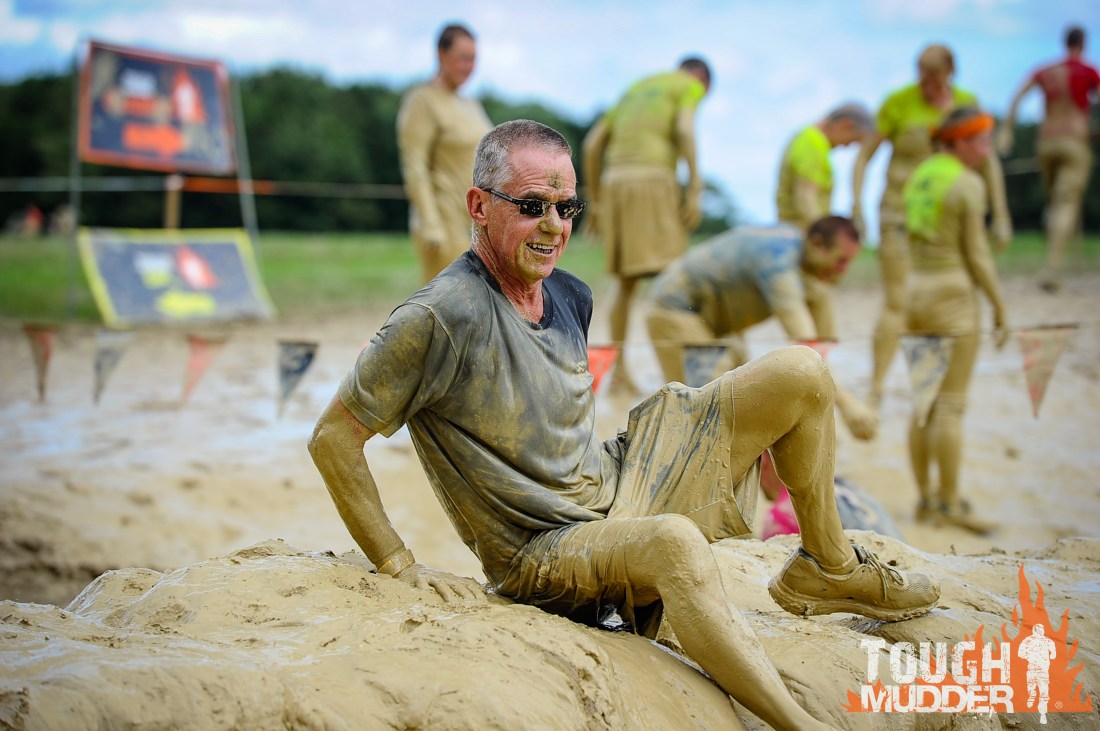
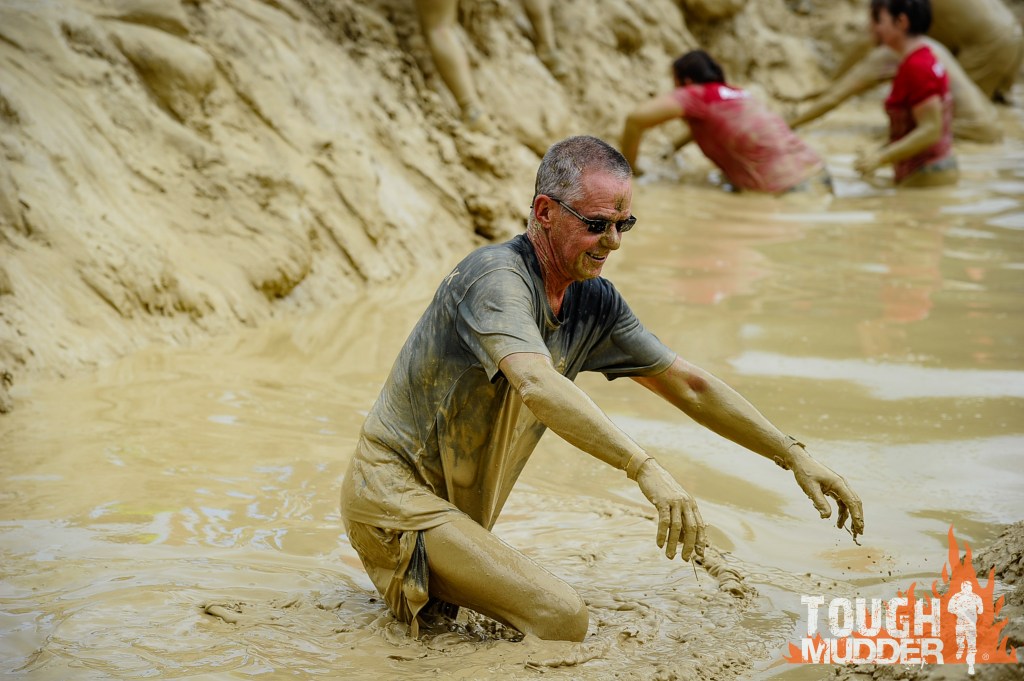
The mud mile

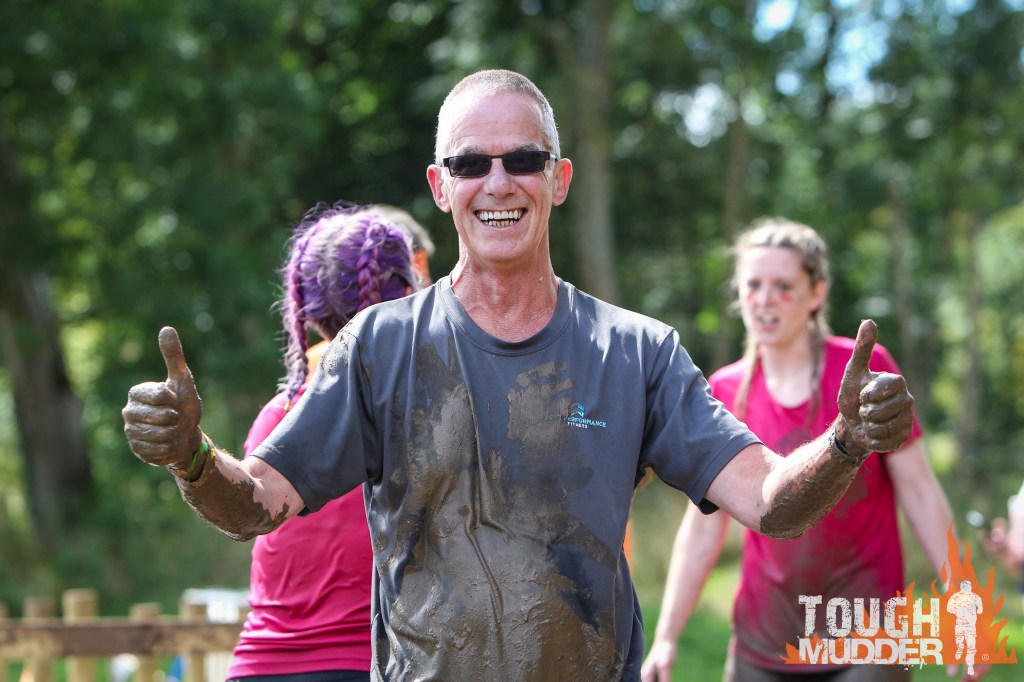
On Sunday I completed the 5k Tough Mudder at Badminton … and I loved it!
I went by myself which was a bit nerve wracking, but the atmosphere was so good that I started to lose my nerves … at least until my start time started to approach.

It was not so much the obstacles that concerned me. Ben had been working me hard for several months to improve my upper body strength and my all round fitness and stamina. It was the running that I was worried about. I am not a runner and only really started running fairly short distances about 6 weeks ago.

But Tough Mudder is not about the running. It is about teamwork and testing yourself.

The warm up session of about 12 minutes was fantastic. It is a mixture of physical warm up, humour, bonding with your fellow runners (or fellow heroes) and psyching everyone up for the challenge. And soon we were off, a gentle run of nearly 1k to the first obstacles which were the Hero Walls – three walls of increasing height that you have to get over. And the great thing is that we all helped each other when it was needed.


I had to wait a couple of minutes at the Hero Carry for another solo runner to turn up so that we could take part in the challenge. And as there were no other solo runners at the Texas Hold Em, I had to miss that one out.


And then the mud started to kick in, with the Devil’s Beard (crawling under a cargo net), the Boa Constrictor (going headfirst down pipes into muddy water) and the Kiss of Mud (crawling through thick mud under barbed wire).

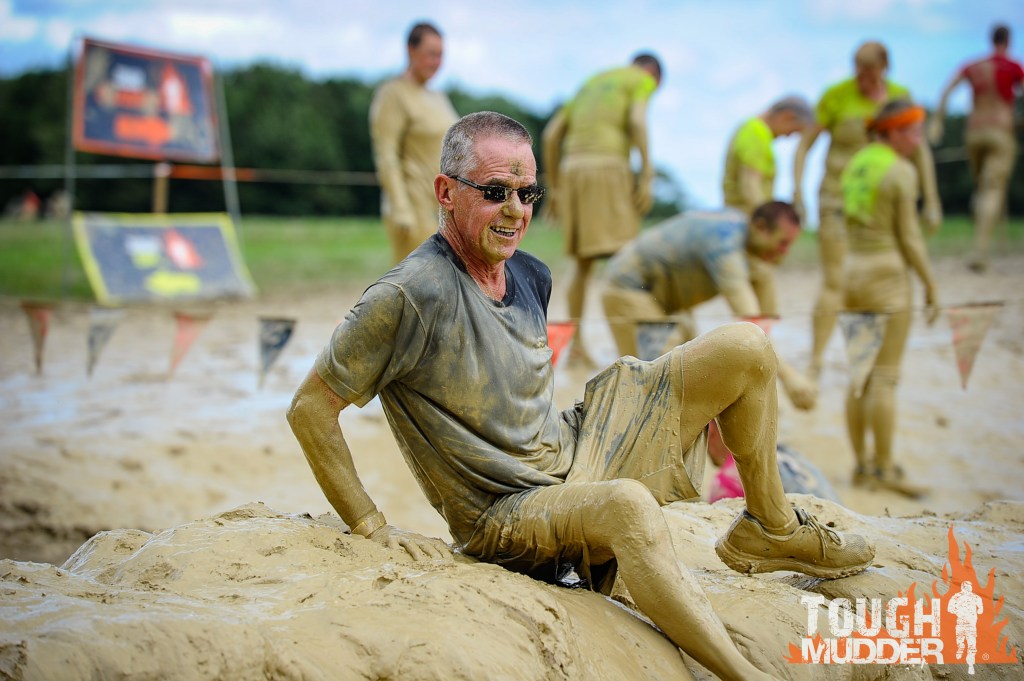
Just had the Kiss of Mud

Mud and water kept coming thick and fast, until we got to the fifteenth and final obstacle, the Mudderhorn – not one to attempt if you haven’t got a good head for heights.

So what have I learned?

  • I didn’t have to worry about the running. The first run is by far the longest, and I was still running at the end.
  • I shouldn’t have worn my glasses. I took an old pair with me, which unfortunately turned out to be photosensitive. This meant that almost immediately they went very dark, and after the Mud Mile were covered in mud anyway, useless, and I couldn’t wear them for the rest of the course.
  • I should have been more ambitious and gone for the Classic Mudder which is about 8-10 miles long.
  • It is better to go as part if a team, not only for help round the course, but also to enjoy the atmosphere more.

Would I do it again? Most certainly. I can’t wait for the next one – and this time I will go for the Classic!

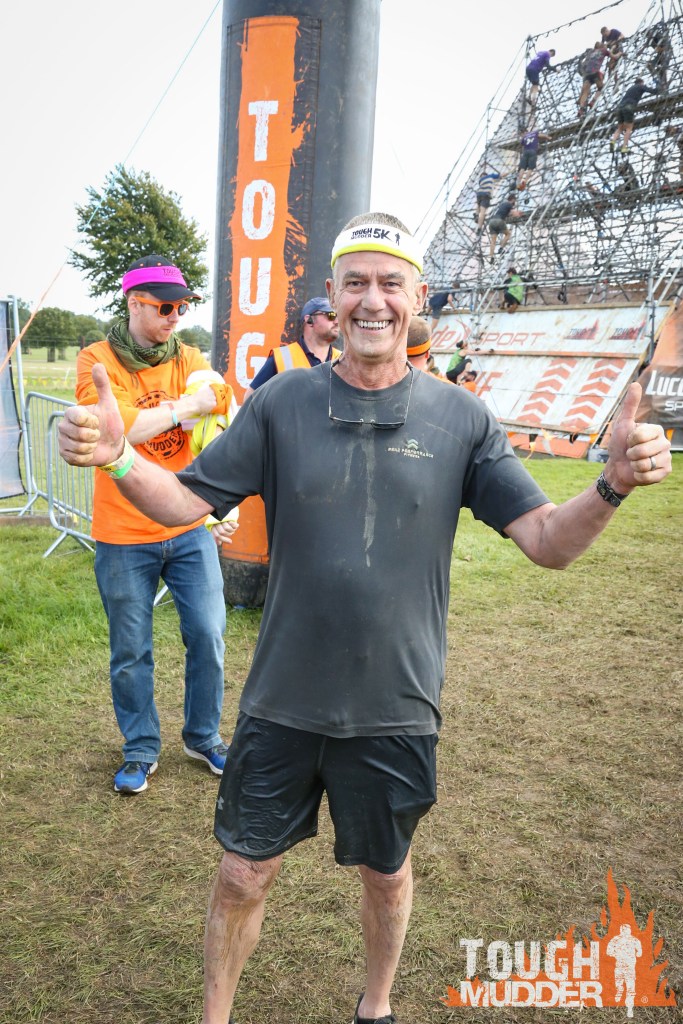
With the finisher’s headband and the opaque glasses round my neck

Not a New Year’s Resolution

I don’t make New Year Resolutions. I don’t see the point in them. But …..

2019 will be a significant year for me. In February I have a significant birthday. I will be turning 60 (or more according to some). So I want to have something to aim for.

In my training with Ben we set goals for each 12 week period. These have included things like leaning out, bulking up, doing a certain number of pull ups, etc. These are all very worthy goals, but this year I want to find something that is more than a short term goal, more of a target which will take me out of my comfort zone and will have an impact on my training regime.

I have put a lot of thought into this and have come up with the idea of doing an obstacle race. I’m not sure that I am ready for a Tough Mudder but there is also the Rough Runner obstacle races.

I don’t know if this is realistic, but it will give me something to aim for and make me do things that I do not normally do.

For a start the word race implies running. This is not something I would normally do. I jog a little on the treadmill at the gym, but to actually run? Not something a Grumpy Old Man would normally do, but I am willing to give it a go.

What do you all think? Please let me know in the comments or on my social media sites.

Trying to Get Nutrition Right

I know a lot of people struggle to get their food and nutrition correct so I thought I would put my ideas in the mix. This is only how I do it; I’m not saying I am doing it right or that this is the only way, but it seems to work for me.

Obviously the first thing is to know your calorie and macro targets. Luckily these are all set by Ben, so I don’t have to worry about complicated formulae. Currently I am on 2,600 calories a day which breaks down to 195g of protein (30%), 228g of carbs (35%) and 101g of fat (35%).

When planning my food, the first thing I try to do is think ahead and decide what I will be eating for the week, or at least what my evening meals will consist of. This make it much easier to plan the rest of the food each day.

I start by dividing my calories into four parts, one for each of my meals and one for snacks. This breaks down to:

  • Breakfast             780Kcal (30%)
  • Lunch                   260 Kcal (22%)
  • Dinner                  780 Kcal (30%)
  • Snacks                  480 Kcal (18%)

As you can see, I tend to have a lot for breakfast, though this may be in two parts, before and after workouts. And it still leaves quite a bit for snacks. These are rough targets and I do not necessarily stick to them, but they are a useful guide.

My best friend in the kitchen are my kitchen scales and I weigh almost everything. I must admit that I estimate some things as I have noticed over time that certain portions are nearly always the same.

I then work out my daily macros with the meals I have planned. If these meals have not been prepared beforehand, these will be estimates. But once you have been doing this for a while they will be surprisingly accurate. By looking ahead for the day, I can see where any deficiencies may lie, eg if the protein target is down, I can adjust the planned meals or make certain that one of my snacks is a high protein shake.

I always try to hit my calorie and protein targets. Carbs and fat are secondary. Of course, I want to hit all the targets, but I am not going to lose any sleep if they are a little off.

I don’t worry too much about the percentage breakdown of my macros. Hitting the correct weight for each of them is what I aim for. I could achieve perfect ratios for my macros, but not consume the correct number of calories.

I don’t look to have each meal throughout the day balanced. I tend to have quite a lot of carbs at breakfast (or breakfasts!) to help give me the energy and stamina to get through the day. It is the daily balance that I am trying to achieve.

If a day “goes wrong”, I don’t get to hung up about it. For example, I recently spent a day on the Isle of Wight and ate bought food for most of the day. I had no idea of weights, ingredients, macros, etc. I could make a rough guess, but that was all it was. It doesn’t happen that often and I do not worry about it. I just make sure that I get back on track the next day.

This applies even more so to holidays. When I am away I tend to see this as a holiday from weighing and measuring as well. Obviously I will not go mad and fill myself up with plates full of chips and cream cakes. It might be a holiday, but I still try to eat healthily and sensibly.

So, what might a typical day look like? This one was taken at random:

Breakfast (1) Breakfast (2) Overnight oats with banana and whey protein (487 Kcal) Scrambled eggs on toast (322 Kcal)
Lunch Chicken thighs with hash browns and salad   (510 Kcal)
Dinner Hache steak, sweet potato wedges, poached     egg and salad, followed by fruit and 0% fat      Greek yoghurt (785 Kcal)
Snacks Protein shake (afternoon) and gin and tonic   (evening) (451 Kcal)

This breaks down as:

Kcal Carbs (g) Fat (g) Protein (g)
Target 2,600 228 (35%) 101 (35%) 195 (30%)
Actual 2,555 211 (36%) 80 (31%) 197 (33%)

OK, so that day I was a little under on calories, but the breakdown of macros was pretty good. I would have done better to have a more nutritional snack than gin and slimline, but life is too short to worry too much about that, and it is good to have some treats. The fat intake was rather low; my fat macro target has recently increased, and I am having trouble getting out of the habit of trying to keep the intake down!

Well this is how I do it. Does anyone have any comments or suggestions about how they keep their nutrition on track? If so I’d be really pleased to hear them.

Am I Too Old For The Gym?

This is a question I sometimes ask myself, particularly at those times when I am suffering from an injury and not able to exercise to the level I want to. Ben, when he is not adding five or ten years to my age, often says that age is just a number. I find that having followed an exercise program with him, this is very much the case. I feel much younger now than I did probably ten years ago; am I really nearly 60?

So, am I too old to go to the gym? Just looking round the gym at Kings Fitness and Leisure confirms that I am by no means the oldest there. So why should someone my age or older train? The reasons are many.

From a health point of view, exercise is very important for older people. It can improve joint mobility which can improve balance and help to prevent, or at least stave off, some of the diseases that can come as we get older, such as osteoporosis. It can improve your physical strength and energy levels. I know that I am much stronger now than I was a few years ago and I seem to have much more energy and stamina than I used to. Exercise can also help to prevent illnesses – I do not seem to suffer from colds and other common complaints like I used to.

There is another health benefit that I was not sure I should mention. As men grow older they often have to resort to using Viagra to “help the along”. Exercise, particularly strenuous exercise such as weight training, increases the production of testosterone in the body and I have found that I am no longer having to use the little blue pills. Not relevant for everybody, but it is a result for me!

Combined with a healthy diet and sticking to the calories and macros that Ben has given me, I have lost a little weight (weight loss was never a major goal). But I have lost an awful lot of body fat. This is excellent from a health point of view as it helps to reduce the risks of diabetes and heart problems.

There can be some physical downsides to exercising when you are older, particularly when first starting out. For example, wear and tear on the joints over the years can lead to recovery times being slower. Injuries can take longer to heal. The cardiovascular system may be weaker if you start to exercise later in life, so it is important to build up slowly rather than jump straight into strenuous exercises like the Viking challenge.

Exercise also has many benefits for mental and emotional well-being. Some studies suggest that exercise can improve cognitive functions so benching or using the battle ropes may be improving my brain power more than doing a crossword, for example.  Exercise boosts the feel-good chemicals in the brain which can lead to a reduction in stress, anxiety and even depression. I was first advised to go to the gym by my doctor as an alternative to being prescribed some anti-depressant drugs.

In general, I feel good about myself. The loss of my body fat and the increase in muscle growth means that I look much fitter that I have for many years – a real boost to my self-esteem and mental well-being.

There are many social benefits to exercise as well. Post-retirement can lead to inactivity, boredom, loss of identity and purpose, and a loss of what to do with your time. Going to the gym, particularly if you have regular sessions with a personal trainer, can fill part of this gap. And with the increased energy that comes from all this exercise, it can also lead to other activities and pastimes. Going to the gym is also a great way to meet new people. Like many people I moved to a new location when I retired. Although I love my new village, when I moved there I knew no one and this can lead to a feeling of isolation. I have met a lot of people from going to the gym, both other gym-goers and members of staff, and it is good to be able to have a chat each time I go in. I have even made a couple of friends through going there.

So, am I too old for this fitness game? No way! I intend to continue for as long as I can!

Body Transformation Programme

image

I have just reached the end of a 12 week body transformation program with Ben Shills from Peak Performance Fitness (http://www.peakperformancefitness.co.uk). The aim of this program was to see how much body fat I could lose in 12 weeks … how lean could I get? I must admit that at the age of 59 I was somewhat daunted by this but was also excited by it and wanted to give it a go.

Ben warned me that this would be a tough program to follow; it would be hard work, I’d feel tired, I would lose some motivation, I would feel hungry, I would probably feel ill. He was not exaggerating!

Targets

The targets we set at the start of the program were mainly aesthetic. This was not about training for a sport or hobby, it was not necessarily about losing weight although some weight loss was inevitable, it was not necessarily about strength and it was not about muscle building although again some strength gain and muscle building was inevitable. This program was all about trying to shed body fat. How much body fat could I lose in twelve weeks? How lean could I get?

There were some other targets. Some of them we achieved together, some of them went by the wayside. The cycling target, for instance, has not been achieved; it was initially set back by the poor weather early in the year, and in latter stages of the program through fatigue. This will be taken forward into the next program … again.

Exercise

We moved from a three way split of push, pull, legs to a two way split of upper then lower twice a week. The advantage of this was that we could achieve a greater intensity in the workout; we would “waste” less time in resting between exercises; and it also meant that each muscle group would be worked at least two times a week.

We incorporated a lot of the principles from the book Principles of Muscle Building Program Design by Nick Mitchell from Ultimate Performance. There is so much in this book which make sense and I have learned so much from it.

One of the downfalls of this new two way split is that there is little time for recovery in the week and the second session of upper, say, could be a struggle.

Another change was that all warm ups and stretches took place before the session started so that more time could be spent on the exercises themselves.

Work did not stop in the gym. Ben set a steps target. Initially this was 11,300 a day (79,100) a week, but this was soon increased to 15,000 a day (105,000 a week) Except for one week these targets were met. I poor weather some of these were done on the treadmill in the gym, but mostly it was done by walking round the village and countryside in the evenings. The annoying thig is that the Stairmaster in the gym does not count steps on my Garmin device!

Also outside the gym I had daily stretching and foam rolling at home, plus some core exercises when I had time. These were most days, even if I was not having a session with Ben at the gym. I also stopped going to exercise classes as the intensity of the gym work meant that more recovery time was required.

Nutrition

Throughout the program I was working in a calorie deficit, although there was one day when I was allowed a “calorie holiday”. Believe me I took advantage of it!

Part way through the program Ben altered my macros to increase my protein intake and to reduce the fat intake. It was difficult to get the balance correct, but I did feel better for having the extra protein.

My eating pattern changed as well. I found I was eating less food but eating more often. Gradually I found that large meals were a real struggle to eat.

The start of the program coincided with Lent and so I gave up alcohol for the first part of the program. I really felt so much better for it. Alcohol has gradually crept back in, but not in the quantity and not in the bulk I have had before – in the whole of the twelve weeks I have only had four pints of cider!

Problems

During the program I had to work through some injuries, most notably a problem with my IT band in the right leg. This meant that some exercise such as hip thrusts and glute bridges had to be abandoned for several weeks.

I also hit plateaus. There was a period when I could not get higher that 180kg on the lateral leg press. This was a cause of much frustration and anger at myself. We worked through it though by using other exercises to strengthen my legs so that I could break through. What a fantastic feeling when it finally happened!

At one point I did feel “broken”. This was just before the early May bank holiday. By this stage I was exhausted all the time, I was hungry all the time, and I did not think that I could continue. I still worked hard through the session, but was shattered by the end, aching all over and felt I never wanted to see a gym again. Over the weekend I continued to feel awful and even considered messaging Ben on the Sunday evening to cancel our Tuesday session. The extra day of rest (apart from the interminable steps) on the Monday did me the power of good and I felt recovered enough to go back and throw myself back into the program.

Learning Outcomes

I learned lots of new exercises and techniques. I did boxing training for the first time in my life and loved it – or was it just the revenge of being able to hit out at Ben? The importance of recovery time became very clear to me. For the first time I was actually looking forward to spending time away from the gym.

This program made me really appreciate Ben. I do not think it would be possible to do a program like this by yourself. Ben was always there, pushing, cajoling, encouraging and occasionally nagging at me to get through an exercise. I keep hearing a voice in my head saying “Come on John. You are better than this”. What has been achieved is as much Ben’s achievement as it is mine.

Results

I have had some weight loss, though this was not really a target of a priority.

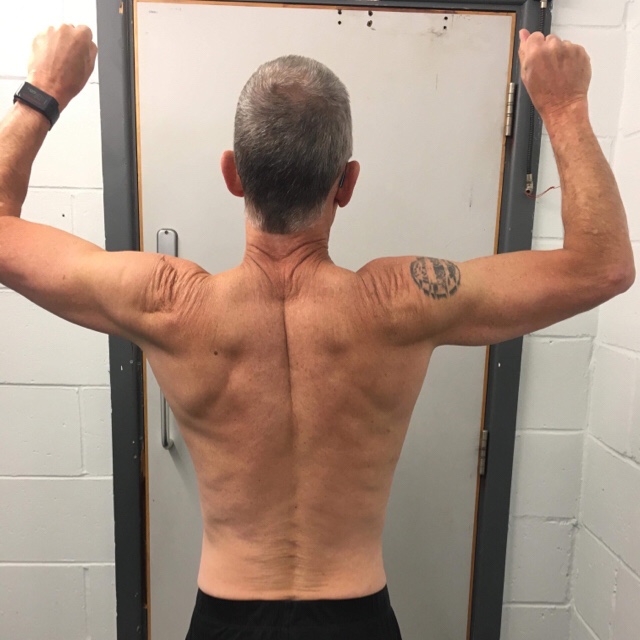
My measurements have definitely gone down, most significantly from round my waist. This means that my musculature has become more visible – I have abs that you can see now! Unfortunately, all my trousers have become too loose around the waist!

I have also been achieving personal bests on a more or less weekly basis, even when I have been feeling tired and exhausted. And I have been so proud of being able to do 3 sets of unassisted pulls ups over the last few sessions. My coordination is still way off, though, when doing dead bugs.

Apart from the one week I mentioned earlier, I have thoroughly enjoyed the program. I have looked forward to going to the gym and have generally felt better and happier at the end of a session than I was at the start.

Conclusions

In all truth, I would have liked to have lost a little more body fat – maybe two or three more weeks would have helped. At the review we decided to keep to this program (with additional steps!) for a further three weeks.

Was it all worth it, though? Most definitely! It has been a pleasure to work with Ben on this project and I have enjoyed almost every minute of it.

What happens now? I am hoping that after the first three weeks of the next program we will work on building my strength and muscle mass.